Conversation with a veteran about man’s best friend
A disabled Army veteran gifts American heroes with a service animal
Nikki Johnson

Paws and Stripes, a nonprofit organization that provides military veterans who suffer from Post-Traumatic Stress Disorder andTraumatic Brain Injury with service dogs.
Q: Where do the funds come from to support your program?
Stanek: We fund the program entirely through donations, scholarships and merchandise we sell from various groups and individuals to provide equipment, training and initial veterinary care.
Q: While in the military what was your MOS (military occupation code to identify a specific job), and how did that shape your decision to assist others?
Stanek: I was a staff sergeant of the U.S Army, as well as president of Veterans Affairs and suffered from several injuries including PTSD and TBI. I trained my own service dog then my wife and I decided to form the organization because we wanted to assist veterans who suffered from similar injuries as mine.
Q: Given this is a nonprofit, where do the animals for the program come from and what is the process to ready them for the veterans?
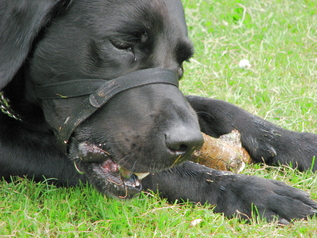
Stanek: The service dogs are obtained from local animal shelters and trained by professionals. Veterans that enroll in the program choose their own dog from one of the shelters and participate in the training of the animal. Each animal is custom trained to assist the needs of its new owner.
Q: How much does this program cost to be involved?
Stanek: Insurance companies refuse to cover the many women and men who return from Iraq and Afghanistan suffering from PTSD and TBI, when the treatment is a service animal. A service like this can cost anywhere from $10,000-$60,000, but for us it’s $2,000, a price the veteran would never have to pay.
Q: So, can any vet
sign up for an animal?
Stanek: No, the servicemen or women has
to be diagnosed with Post Traumatic Stress Disorder and or Traumatic Brain
Injury. The vet must have also been honorably discharged and able to
participate in training sessions.
Q: How does
participating in the program help the veteran?
Stanek: When the veteran is involved
in every aspect of the program, it facilitates healing, builds self-esteem,
increases the bond with the dog, and provides the veteran with the tools to
maintain the dog’s training long after graduation.
 Nicole Johnson