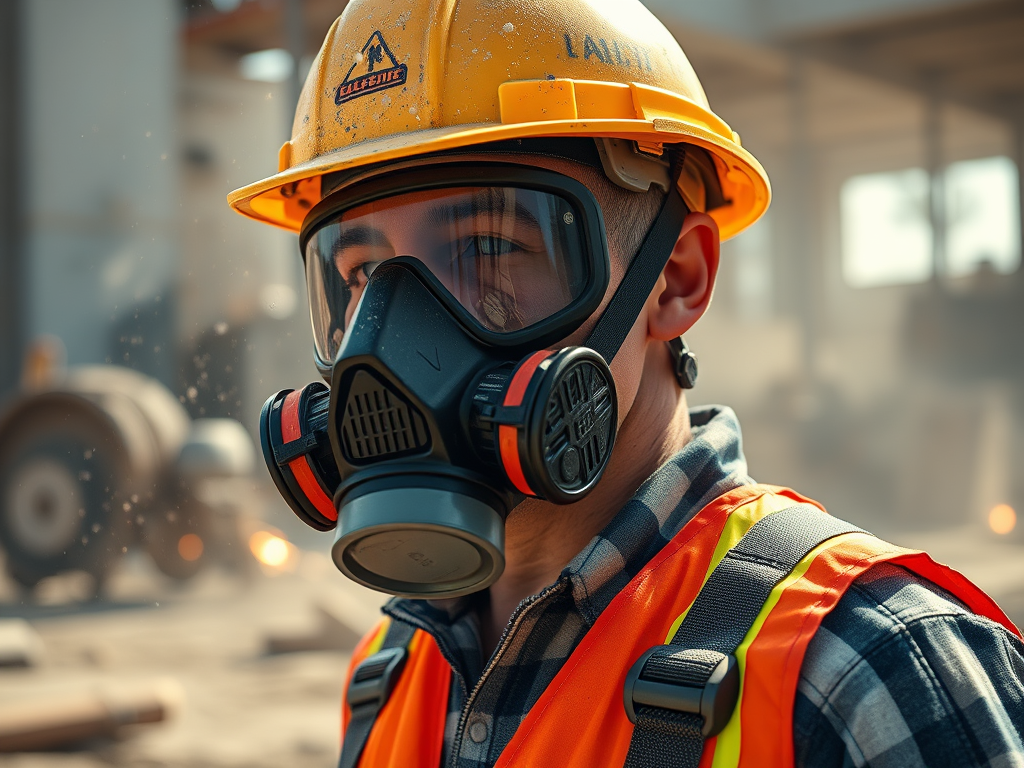
From concrete cutting to welding torches, construction sites are full of tasks that release dangerous particles into the air. Many of these hazards are too small to see and too easy to overlook, yet the damage they cause is real and often permanent.
Despite established federal regulations and decades of heightened awareness, construction workers remain at higher risk of serious respiratory illnesses. The issue isn’t a lack of knowledge or tools, but a persistent gap between mandated safety measures and their on-site implementation.
Respiratory protection is fundamental to workplace safety. Yet in the construction industry, it’s often treated as an afterthought, with workers bearing the consequences.
The Hidden Toll of Airborne Hazards
Construction crews work in some of the most unpredictable and dynamic environments in any industry. As tasks shift, so do the materials and equipment in use, bringing a range of airborne contaminants along with them.
According to the Centers for Disease Control and Prevention (CDC) and National Institute for Occupational Safety and Health (NIOSH):
- In 2020, 19.7% of construction workers were diagnosed with respiratory conditions, including asthma, chronic bronchitis, and Chronic Obstructive Pulmonary Disease (COPD).
- One in four workers with COPD had never smoked, indicating occupational exposure as the likely source.
These diseases often develop over the years, making early detection a challenge. However, for workers exposed to daily airborne hazards, the long-term consequences can be life altering or fatal.
The Limits of OSHA Regulations
The Occupational Safety and Health Administration (OSHA) has long recognized the dangers of inhalable contaminants. Under 29 CFR 1910.134, any employer requiring respirators must implement a written respiratory protection program, which includes:
- Selecting respirators appropriate to the hazard
- Medical evaluations and fit testing
- Comprehensive training on use, care, and limitations
- Routine program review and recordkeeping
Construction-specific regulations, such as OSHA’s respirable crystalline silica standard (29 CFR 1926.1153) mandates dust controls, exposure monitoring, hazard signage, and protective equipment for tasks that generate airborne silica.
While these regulations are thorough on paper, their practical enforcement and comprehension often fall short.
Why Jobsite Compliance Fails
Construction environments change rapidly. One day it’s demolition; the next, it’s welding or insulation. This variability makes consistent respiratory protection difficult to manage, and easy to neglect.
Many contractors provide respirators, but fail to ensure proper fit or train workers in how to use them. Others skip written plans altogether, assuming that personal protective equipment (PPE) alone is sufficient. Supervisors may not fully understand what constitutes a respiratory hazard, or when to implement controls beyond handing out masks.
The result is a culture where protection is reactive, inconsistent, and often ineffective.
Even well-intentioned employers can fall short when they rely on outdated assessments, assume previous controls still apply, or fail to account for temporary workers who haven’t received the same training.
Rethinking PPE as the Last Line of Defense
One of the most persistent misconceptions is that providing respirators equals compliance. However, OSHA’s hierarchy of controls positions PPE as the final safeguard. It is to be employed only when other hazard mitigation strategies are insufficient.
Effective protection begins with:
- Eliminating or substituting hazardous materials whenever possible
- Implementing engineering controls like wet cutting, local exhaust ventilation, or HEPA filtration
- Adopting administrative controls, such as rotating workers to reduce exposure time
Only after these measures should PPE be introduced to supplement protection efforts. Yet on many jobsites, PPE becomes the primary, and sometimes sole, defense. \
Safety Culture Starts with Accountability
A strong respiratory protection program doesn’t depend on rules alone. It depends on buy-in, from leadership down to the crew.
Supervisors must take ownership of airborne hazard planning. Safety managers should verify that respirators are not only available, but appropriate, tested, and well maintained. And most importantly, workers must feel empowered to pause work or request better protection without fear of reprisal.
Impactful programs:
- Adapt to evolving site conditions
- Apply to all workers, including subcontractors and temporary staff
- Include regular inspections, maintenance, and fit testing
- Treat respiratory hazards with the same urgency as fall protection or lockout/tagout procedures
Creating this kind of culture doesn’t require more regulation. It requires commitment to the health of every person on the job.
How Labeling Improves Respiratory Safety
Labeling may not be the first tool that comes to mind when addressing respiratory health, but it plays a critical role in reinforcing awareness and promoting safe practices.
In high-risk areas, such as silica cutting zones, chemical storage rooms, or confined spaces, hazard signs and visual communication are essential. Durable, compliant labels can alert workers to required PPE, identify air monitoring equipment, and mark areas with restricted access due to airborne exposure.
Labeling also supports:
- GHS-compliant chemical identification on containers and mixing stations
- Fit testing and training logs at PPE stations
- Storage identification for respirator types and filter cartridges
- Signage for HEPA filtration units, negative air machines, and local ventilation points
Well-placed, weather-resistant signage helps eliminate guesswork and ensures every worker, new, temporary, or experienced, receives consistent visual guidance. With fading compliance often stemming from miscommunication, effective labeling becomes an anchor for daily operations and training.
Best Practices for Jobsite Respiratory Protection
Creating a reliable respiratory protection program doesn’t have to be complex, but it must be consistent. Key practices include:
- Conducting real-time hazard assessments as conditions shift
- Reinforcing training regularly, especially after task or crew changes
- Maintaining respirators and replacing filters on a defined schedule
- Updating the written plan as part of project start-up and post-incident reviews
- Labeling all relevant zones, equipment, and PPE storage clearly and accurately
Every jobsite is different, but the commitment to protection should remain constant.
A Clearer Path to Safer Air
The repercussions of inadequate respiratory protection are evident in the health records of countless workers who have developed preventable illnesses simply by performing their duties.
Ensuring clean air on construction sites should be a fundamental expectation, integrated into every phase of project planning and execution.
With established regulations and available tools, bridging the gap between safety protocols and their practical application is both necessary and achievable. It’s time to prioritize the health and safety of workers, ensuring they breathe.
 Nicole Johnson
Leave a comment